Facebook

Showing posts with label WSER. Show all posts

Saturday, December 28, 2024

The Bright Side of Injury - a 2024 recap

Athletically, 2024 was (mostly) a bust.

I've been dealing with plantar fasciitis since late May and have spent a good chunk of the year feeling sorry for myself and getting rounder in the mid-section. When such a huge part of your identity is running and adventuring, it can be mentally and physically challenging to stay true to your authentic self while you try to stay grounded for your family, friends and others who depend on you.

Dealing with injury requires patience, humility and new hobbies. It's good to remind yourself that athletics aren't always everything. There is so much more to life and plenty of other adventures that await.

I want to thank Vespa Power Products for continuing to believe in me just like I believe in their products. Vespa truly has changed my athletic outlook and simplified my endurance nutrition. I'm truly happy to be back as an ambassador for 2025.

If you're tired of crashing during races and would like to recover faster from training reach out and let's talk about how YOU can optimize the single greatest fuel source your body already has...FAT! It's clean. It's (nearly) limitless. It's natural.


Athletic Adventures

If you read any of my previous posts you would see that I was on the Western States waitlist and essentially training as if I would get my number called for the race in June. My training started off well but that's when laziness, age and the lack of self-care came to blows. The onset of plantar fasciitis and the slowness of the waitlist led me to withdraw from Western States. It turns out my place in the waitlist did not get drawn but I managed to have some fun regardless.

Fellow Vespa Athlete Jeff Browning

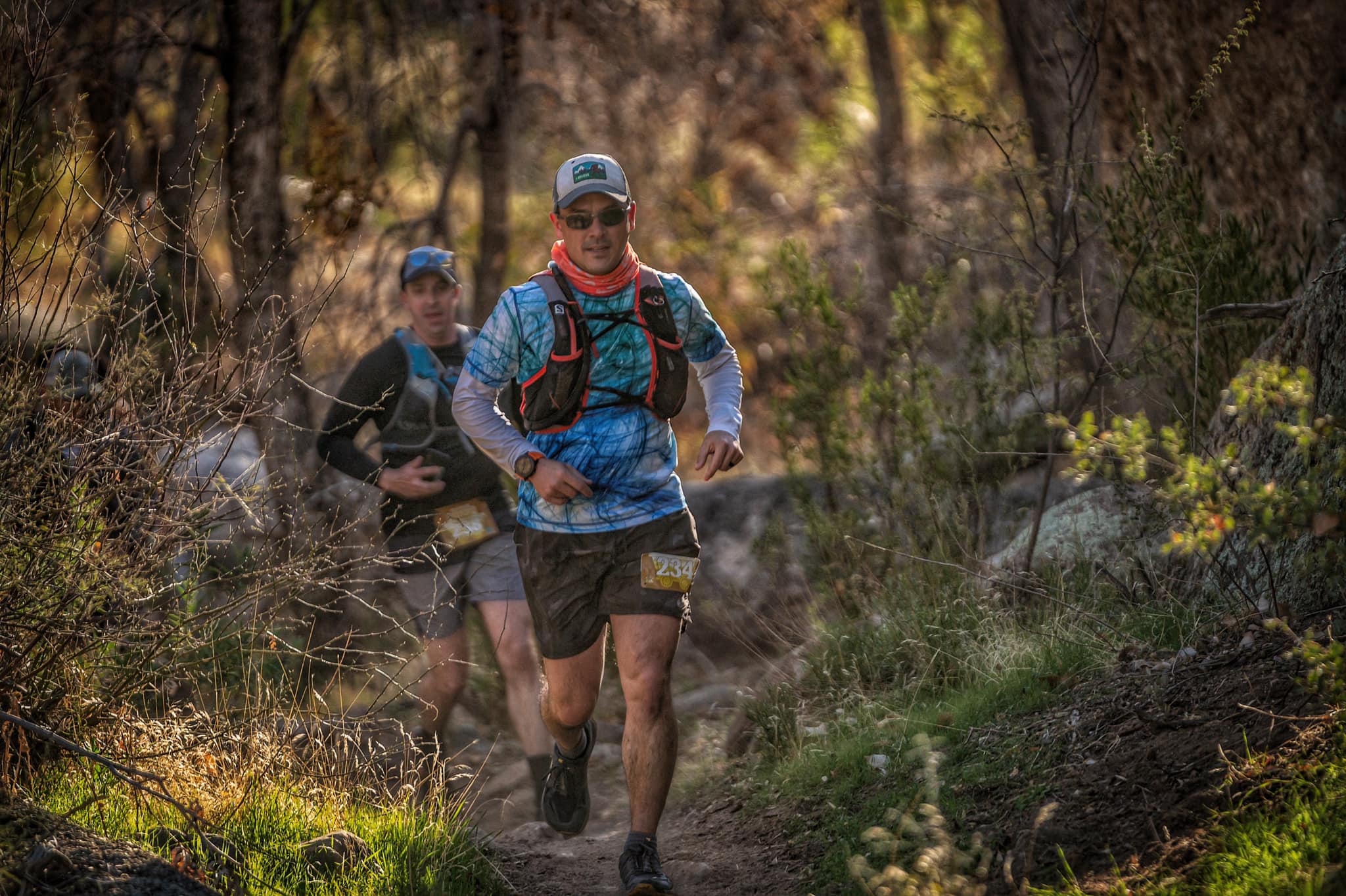
A fun 50k in Pine

  • February
    • 10th annual Hom 100 charity run/walk
    • Aravaipa Canyon hike/camping trip
  • March
    • Grand Canyon Rim to River
  • April
    • Hiking parts of the AZT
    • San Tan Sinister 27k
  • May
    • Pine Trail Run (50k)
    • Elden Crest 38 mile
  • June
    • Mt Baldy hike/adventure

Family Adventures

I have always told the athletes I coach that typically injuries are a blessing. Primarily, it's your body telling you to fuck off because you're pushing too hard. Second, the break provides some much-needed re-focusing of your energy to those things you've either neglected or wouldn't have done otherwise.

I am REALLY tired of being injured but looking back on my year, I truly am thankful for it because otherwise I would not have:

  • Helped plan my eldest's 21st birthday party
  • Helped plan my youngest's 18th birthday party
  • Celebrated my youngest graduating high school
  • Gone to Vegas 3 times this year! Birthdays! Formula 1 with my son! Garth Brooks concert!
  • Tried pilates classes for the first time
  • Gone overlanding for 10 days through NM, CO and UT
  • Visited Washington DC with my wife
  • Volunteered for 10 days at the Grand to Grand Ultra
  • Crewed and volunteered at the Kodiak 100k
  • Gone to concerts
    • Daughtry
    • Cyndi Lauper
    • Dead & Company
  • Volunteered with ALS Arizona
Youngest's graduation
NM/CO overlanding trip
Grand to Grand volunteering
DC with my wife

That's just a fraction of the things I was able to do while not being focused on running or training. Seasons will change - you can either resist the change or flow with it...

2025 Outlook

The coming year is already filled with big plans! I'm positive this injury will clear up soon and I'll be back to that training life. Yeah!

First, being selected as a Vespa ambassador again is amazing - it's a tough spot being injured and trying to promote a product you're passionate about. I was worried I had not done enough to be invited back...

Combining 2 things I'm passionate about! Vespa and G2G ❤️


Second, my love and participation in the Grand to Grand Ultra continues to bear fruit. I'm lucky enough to be a featured coach for this race and will be the new 2025 Race Commissioner! These are big shoes to fill but I'll do my best and have fun at this years race.

Lastly, I've set into motion a bucket list adventure that will take place in mid-June. Details to come but holy shit is it going to be amazing!

Epic adventure loading...


Tuesday, April 16, 2024

Western States Waitlist Woes

You've struggled. You've raced the qualifiers. You've hoarded those tickets. You've waited YEARS to hear your name get called during that live lottery drawing in Auburn.

Those fateful 300 names get called and yet again, you're not one of them. Womp womp! Western States clearly doesn't want any of my 64 tickets.

There's still the waitlist though!

75 more chances to redeem yourself!

You hear your name! Wahoo! Glorious joy and thanking the heavens begins 🙏🏞 Glasses clink ðŸĨ‚ Friends are ecstatic and lining up to pace and/or crew.

What spot? Number #52 on the waitlist.

Is that good? It's good right?! Sure, you'll be good...

While there is a certain satisfaction knowing you're on the waitlist for one of the most iconic races in the world, there is also the reality of where you fall on that waitlist. Everyone points out that 2 years ago, all 75 people on the waitlist got entry into the race. This is an anomaly to be sure but it gives one hope right?

After the lottery is over and the pats on the back have calmed down, you begin your daily (mildly-obsessive) routine of watching and refreshing the waitlist page.

For whatever reason, you expect athletes to drop like flies once the horror, logistics and money-pit-of-a-race it is sinks in. But watching the waitlist get updated is like watching paint dry or grass grow.

Excruciating.

You might think this happens quickly in the weeks or months following the lottery but you'd be wrong (see graph below). Presently, there are only 13 people that have been removed/entered into the race for 2024.

Historically speaking (yes, I'm the nerd who created this Excel graph) you can see that April through June are when a majority of people figure out they're not ready for the big dance.

Waitlist changes per month


Cumulative drops by month

So what's it all mean?

Starting with the basics - the average number of people coming off the waitlist is 60 if you average back to 2017. Good news when you're #52.

That's really where the good news ends and the BS begins. You're essentially straddling the fence of being in or out of Western States. Meaning, you have to be prepared for both racing Western or not (which means you still need a qualifying run).

Preparing to run Western States

  1. I've put money down on lodging in both Olympic Valley and Auburn (partial refund policy)
  2. I'll have to drive or fly in California (partially refundable)
  3. I have to convince crew and pacers to be on 'standby' for traveling to the race
Preparing to Qualify (Again)
  1. I have already paid for a qualifying race (non-refundable)
  2. I'll have to drive/fly to the race (partially refundable)
  3. I'll have to find/book housing for this race (partially refundable)
Bottom-line, being on the WSER waitlist means you're throwing away money one way or another.

"Oh, that's gonna hurt. Maybe I shouldn't do it"? said no ultra-runner EVER 😂

Current State

As of the 15th of April, there are still 38 souls in front of me (e.g., 13 people have come off the waitlist). It feels more like it's going to happen than before so I've really started to pick up the training and get serious.

I really hope it's my time for the big dance.

Tuesday, January 31, 2023

Training smarter, not harder

I went into this post looking to write up a detailed blog for those folks interested in trying out Vespa. That was almost 2 months ago (so hard to find time to write!)ðŸĪĶðŸ―‍♂️ While Vespa is a very critical part of my training, there are other things I'm doing that ensure I stay fit, healthy and mentally ready to take on new challenges. Now that I'm "over the hill" 😝 in this new 50-59 age bracket, I have securely latched onto the idea that it's ok to train smarter, not harder.

Reflecting on 2022

Let's be real for a second. Since the pandemic, I have lost some passion for running. I still love being out in places where only my feet can take me but the grind of running every day is not appealing or healthy. As I've searched for things to replace that passion, I've discovered that new adventures, challenges and the unknown is really what makes me happy. Camping, hiking, off-roading, destination races...just being outdoors with like-minded people is how I charge my battery.

Anecdotally, I feel the best I've ever felt and engaged in WAY more types of activities than ever before. Ultra-marathons (Jangover 75k, Cuyamaca 100K), a multi-day hike through the Black Hills of South Dakota, and a century bike ride (for charity) are only some of the examples I've been able to accomplish on nothing more than a little planning and being "smart" with nutrition, training and sleep.

I guess you could say I have a newfound passion for variety. It is the spice of life (so I've heard) 😉

Long ago when I started running, the veterans would say, "Make sure to cross-train". As a snot-nosed kid, you're either invincible or don't know what that means. Well, now I do and let me be the first veteran to say to you, "Make sure to cross-train!" (and get off my lawn!) lol

Training

What if I told you I run 2 days a week for a 100k ultra-marathon? My younger-self wouldn't believe it either but that's been my MO for the last 3-4 years now.

Cuyamaca 100K (2018) ✅ - 16 hours 9 minutes

Waldo 100K (2021) ✅ - 15 hours 11 minutes

Cuyamaca 100K (2022) ✅ - 16 hours 15 minutes

Am I out to break records? Podium? No - I'm just looking for that WSER qualifier. Enough to gitt'er done and have some fun!

It's not as though I'm sitting on the couch eating ice cream the other 5 days of the week however. The rest of the week is filled with cycling, rowing, weight lifting, boxing and hiking. Again, there's that variety.

So what does that week look like?

Mon   Tues Wed Thur Fri Sat Sun
Easy spin
- Stretch
- Massage
- Row
- HIIT workout
- Endurance spin - Weights
- Box
- Row
- Recovery spin
- Meditate
- Yoga
- Long run - Long run
(plus vert)

I am currently ramping up miles using this same plan as I get ready for Zion 100k in mid-April. All of these things have been essential in helping not only keep my attention but free from injury and burn-out. The other beauty of this regiment is that I've left any periodicity behind. I do this week-over-week for 14-16 weeks instead of 3 weeks on, 1 week off/rest. There is ALWAYS enough active recovery during the week to prepare for the next weekend of long runs.

Nutrition

So let's talk about Vespa. I would not be able to get through those long weekend miles or recover without it. What's the big deal you might ask? Let's get a few fundamentals out of the way (keep reading or watch this 1-minute video). There is also a more detailed FAQ here.

What is Vespa? It's a naturally occurring catalyst that helps you body tap into your body's fat for fuel.

Do you use other gels with Vespa? Absolutely. The calories in Vespa are not meant to replace traditional gels or carbs. I typically take a Vespa (concentrate) every 2 hours and a gel every hour when training or racing.

How does Vespa provide energy? Gels provide energy via the sugars they contain (largely sucrose and/or fructose). Vespa tells the body to look for fat as the source of energy instead of carbs. Fat is a cleaner-burning naturally occurring fuel source.

What are the benefits of Vespa? The most prominent include: (1) Minimal lactic acid-related soreness, (2) fewer GI-related issues, (3) sharper mental acuity and (4) a consistent source of energy without the ups and downs (e.g., no bonking during the Arizona summers).

If it sounds like I'm "drinking the Kool-Aid", it's because I LITERALLY AM! The Vespa Kool-Aid! ðŸĪŠ I would not have applied to be an ambassador if I didn't believe in the benefits or experience them first-hand.

I think it helps that I practice intermittent fasting (I don't eat between 7 pm and 12 pm the next day - 17 hours). This doesn't happen overnight so do some reading if you think it's right for you. As you continue to work out and/or burn calories in a fasted state, the body has to adapt and find fuel wherever it can. I believe the physiological changes that accompany intermittent fasting helped me realize the benefits of Vespa while training but certainly there others who maintain a traditional diet and also see similar benefits.

Otherwise, I eat what I want throughout the day. No special diets - I'm not keto nor do I cut out certain food groups. I eat responsibly across all the food groups (beer is a food group right?!)

Some small nuggets I've learned while using Vespa

  1. Gels that are dextrose-based (like VFuel) are easier to digest for me. My body gets very confused when I add sucrose or fructose.
  2. You don't have to eat fat-heavy foods (like avocado or bacon) to experience the benefits of Vespa
  3. Vespa does not eliminate the need for calories (but it DOES significantly reduce the total needed!)
  4. Managing your electrolytes and hydration is critically important

Sleep & Supplements

If you're not getting 7-8 hours of sleep, you're doing your body (and mind) a disservice. I believe quality sleep is one of the best things you can do when training for endurance events. Your muscles, cells and mind depend heavily on the regeneration of red blood cells to keep you going.

I am definitely not interested in giving up my IPA's but also recognize that alcohol does have an impact on the quality of sleep you can achieve. Because of this, I try not to drink after 6 pm...but sometimes that first beer tastes so good you need another 😉

Aside from sleep, I've found value in taking vitamins and other supplements to keep my endurance and body feeling good. There is a list of the supplements I take but you-do-you...there are a ton of options and ultimately, it's your choice what you put in your body.

  1. Multi-vitamin
  2. Vitamin D-3
  3. Flaxseed oil
  4. Probiotic
  5. Chondroitin-Glucosamine
  6. OptygenHP (First Endurance)

Final Thoughts

Remember, there is no magic training formula that meets the needs of everyone. Your personal commitments, time and life circumstances will help guide you down a path that's comfortable for you. My objective here is just to provide insight to the things I do based on my life, needs and goals. Perhaps you can use some of these ideas for your own training. Best of luck with your own goals!

Be safe out there!

(if you're interested in trying Vespa, please use my referral link or 'RunRovertRun15' as the coupon code when you check out)

Monday, December 5, 2022

Cuyamaca 100k race report

The last time I was in Cuyamaca was in 2018. I wasn't planning on being here again for 2022 but a calf strain and sciatica issues wiped out my hopes of going back to Miwok to avenge my 2019 DNF. So it was either Cuyamaca or Javelina Jundred for a Western qualifier...and JJ was full sooooo 😏

My training and confidence for this race was buoyed from using and being a Vespa ambassador. I was so successful using it for Waldo 100k last year that I doubled-down on the product and a strict optimized fat metabolism (OFM) running/racing strategy. It's ideal for summer heat training in Arizona and pairs well with the intermittent fasting I started nearly a year ago.

Cuyamaca is one of those races where it is either hot as balls or perfect running weather. Oh boo-hoo, right? Perfect running weather...why would that be a problem? Well, training in the Arizona summer means a very strict regiment of hydration and electrolytes. Altering that strategy on race day is not something I've been able to master yet (at least for this particular race).

Loop 1 (32.3 mi)

Cuyamaca is one of those sultry vixens that lulls you into a false sense of comfort during the first 8 miles. Once you break free of the starting conga line, it's largely smooth sailing on the California single-track as you make your way to Merrigan AS (8.4 mi). You would think I'd learned my lesson in 2018, but of course I took this first section WAY too fast. I felt great, but like I mentioned, this section lulls you in with its net downhill profile only to give you a sucker-punch as you head to Green Valley AS (14.2 mi) and eventually up to Cuyamaca Peak (23.2 mi)

Leaving Merrigan, the single-track gives way to forest service roads as you start the 15 mi trek up to Cuyamaca Peak. Much of this is still runnable but it gradually takes its toll on the legs as you plod your way up to 6,200'.

It was here that the inability to adjust that fueling and hydration strategy began to rear its ugly head. Whether it was a combination of altitude, hydration and/or electrolytes, it was obvious that something was not right. My pace up to Cuyamaca Peak was a slow agonizing crawl. I stopped nearly a dozen times in the last 1/2 mile up to the peak because (a) my heart felt like it would explode and (b) I couldn't tell if I was hungry, nauseous or dehydrated.


Once at the top, I curled up into a ball and tried to take in some solid calories (avocado and bacon) and more electrolytes/water. Turns out this is not what I needed at all. After 45 minutes of drowning is self-pity, I had already conceded that this unforced error was going to cost me the 17-hour cutoff to qualify for Western States. I pulled myself out of the chair knowing what gnarly 5-mile stretch of downhill awaited me on the way to Paso Picacho AS (28.2 mi). Not more than 500' away from the Cuyamaca Peak aid station I pulled over to the side of the road and empty the entire contents of my stomach ðŸĪŪ Multiple times. Violently. What felt like liters...

Now most folks see vomiting as the final nail in the coffin when it comes to a race. But if I've learned anything from all these years of ultra-running, it's that a good puke means a fresh start. My body clearly had something it didn't need or like and puking is just its way of clearing it out. I've also learned that even in a 'depleted' state (with the help of Vespa), I'm comfortable running on an empty stomach knowing that my body will leverage my fat as fuel rather than carbs.

I'll admit, heading down to Paso Picacho was still slow but I felt 100x better. The big question looming in my mind was whether I could muster enough energy (and fueling strategy) to finish under the 17-hour cutoff. After an 8 hour and 20 minute 50k back to the start/finish line, Adam would help me gather the necessary gear, fuel, headlamp and water to get me back out there for loop 2. I started loop 2 with a soft whisper in my ear that finishing under 17 was still possible if I could keep things together.

Important note: Leaving for loop 2, I was in 188th position out of 228 runners. Total time 8:20.

Loop 2 (12.8 mi)

This section of the race wastes no time kicking you in the balls. Immediately upon leaving the start/finish, you climb. It's not hands-on-knees climbing but it's enough to get your attention. It's also a great time to regroup mentally - especially when doubt still clings to your mind. It was in this 4-5 mile stretch that I found a fueling strategy that would take me to the finish line.

VFuel has been a solid gel for me to supplement with over the last couple of years. It's dextrose-based and is much easier to digest than other fructose or sucrose-based gels. It also had just the right amount of electrolytes for my pace and the weather that day. I would settle on a Vespa concentrate every 2 hours and a VFuel gel at the top of every hour.

Pro tip! Avoid gel burn out/gagging using this simple trick. Squeeze half the gel into your mouth. Take in a mouthful of water and swish for 5-10 seconds. Gel dissolves and can be swallowed without any issues!

One of the more challenging aspects of this race is the steep downhill sections. The backside of Cuyamaca Peak is the first, and the downhill of loop 2 makes you seriously question how the downhill of loop 3 is going to kick your ass (and your quads)!

Nevertheless, with the exception of the initial climb, I would run nearly all of this loop back to the start/finish line in just over 3 hours and 15 minutes. That whisper of doubt was soon replaced with a steady chant..."you got this"

Important note: Leaving for loop 3, I would improve to 142nd position. Total time 11:41.

Loop 3 (18.2 mi)

There's a cruel pattern that emerges at Cuyamaca (and with most WSER qualifying 100k's). Climb and descend. Climb and descend. Repeat until exhausted. Loop 3 does not break from this norm and once again, you find yourself climbing shortly after leaving the start/finish. Darkness had descended at this stage so the remainder of the climbing was hidden in the blackness of night. I love the unknown of climbing at night for some reason. Aside from a stream of headlamps, you often don't know where or how high you have to go...I naturally feel compelled to run as much as I can. Weird, right?

Turns out, that strange quirk of mine combined with the extremely runnable trails of this loop helped make quick work of the mileage. I felt as strong and agile as I had running that first 8 miles to Merrigan. Yes, my quads were sore but I never stopped moving this entire loop (ahem, except for that 1/4 mile wrong turn I took). I love how supplementing with Vespa (and burning fat) helps alleviate the buildup of lactic acid in the muscles and delay the onset of muscle soreness. Being on your feet for 12+ hours will make anyone tired but with Vespa, I feel powerful and strong when everyone else is clearly already on the struggle-bus.


I would leave the Pedro Fages AS (56 mi) knowing I had over 2 hours to complete 6ish miles to the finish. It was only then did I loosen the reigns a little bit and enjoy the final downhill section. Quads were a bit sore but I never stopped moving. Who would have thought I'd be running up the hills nearly 16 hours into the day and feeling alert, calm and confident about cracking the 17-hour cutoff?

I would surprise my crew as well coming into the finish line much earlier than expected. Adam just happened to show up in time to snag a video of me finishing 😁 


Important note: Finish time 16:15. 103rd position

Synopsis

I'm confident that my electrolyte intake (e.g., too much) is what sabotaged my first loop on the way up to Cuyamaca Peak. The dry California air along with the altitude and oversaturation of electrolytes was the recipe for my yack-attack. I love First Endurance Liquid Shots but they apparently have too many electrolytes for the cooler Cali temperatures.

I'll continue to preach from the mountain top to anyone that will listen - fueling with fat is a game changer. I intermittently fast each day but beyond that I eat and drink what I want. I'm not keto nor do I diet. But when it comes to running/racing, teaching your body to use fat as fuel (with the help of Vespa) unlocks so many benefits, I'm ashamed it's taken me so long to adopt this strategy. I'll hopefully write another blog expanding on these benefits and how I incorporate them into my training.

Race Gear

Pack ➡️ Ultraspire Zygos 5.0
Shoes ➡️ Altra Lone Peak 5


Sunday, October 14, 2018

Cuyamaca 100k Race Report

I knew back in February when I couldn't run Black Cayon 100k that I would need to find a substitute race for my 2018 WSER qualifier. I also knew it would probably be a late Summer/early Fall race too which meant doing the thing I loath the most...training during the Arizona Summer.

{GROAN}

You'd think that the worst thing about summer training would be the heat, but you'd be wrong. Surprisingly, when I thought about this (yes, this is the stupid shit you think about on long runs), there is a pretty good list of heat-induced hell you have to train through.
  • Run quantity: 100k training means you're running at least 5 days a week, if not more.
  • Early days: When you label your 2:30 am alarm as "WTF?" or "OMG it's early!"
  • Sweaty clothes: Morning, noon or night runs mean you're sweating your ass off in the desert.
  • Laundry: More runs, more clothes, more stink means more laundry.
  • Hydration: Weekend long runs routinely required a cooler full of ice, water, sodas and beer.
So needless to say, I have never been happier to be done with training. A week prior to the race, we could see that the temperatures on race day would be significantly cooler. This was a blessing for sure but it represented a small hitch - all the heat training, clothing and gear we thought we'd need got tossed out the window given that the high temp would be 65 with lows in the mid-40's. It's not often you get perfect race days like this but it was a far cry from our summer of hellish heat.

Lining up for a race has never been so glorious. It was 48F and shorts, arm sleeves, a buff and t-shirt was all I'd need to kick off my day of running. I started with a bottle as well - which was strange given I'd trained the last 4 months with a pack. Jump ahead to mile 13 - it makes sense now that my arm was sore from carrying that bottle for 3+ hours :-)


Dan and I ran together for quite a while - the cool temps and adrenaline of dusting off those taper-legs propelled me easily into the first aid station where Greg was waiting to take care of us and grab all the clothing we were shedding as the temp climbed to a paltry 55F. Somewhere between the first and second aid station, Dan would leave me behind. I thought he stopped and peed for the 5th time :-) and expected him to pop out behind me somewhere but I lost sight of him going uphill and never saw him again until after we both tagged Cuyamaca peak. The first 15 miles of the course is a great combination of single-track trail and service roads. You can tell that that service roads have been recently graded and I was very thankful for that! Between Merrigan and Green Valley aid stations, you have to decide whether you're going to run or hike...it's not steep but it is that gradual gentle grade that makes you earn every bit of the uphill.

A funny thing happened on the way up Cuyamaca peak. Tight neck and shoulders, constricted lungs, heavy chest and my stomach in knots I just did back-to-back training runs in Flagstaff at 9,000+ feet, why am I getting altitude sickness at 6,000 feet?! There isn't much you can do about it either except slow down, drink water and keep going. So I did. The feeling would subside somewhere near the peak (~6,500 feet) where I managed to down some food, soda and about half a dozen Otter Pops. That half mile up to the peak is about a 16-18% grade...I thought it was horrible going up but it's even worse coming back down!

I had talked to a couple locals during the race who mentioned that coming down Cuyamaca Peak was probably the most technical (and difficult) part of the race. They weren't wrong. Large sections of boulders mixed with loose rocks and trenched out trail made for a pretty steep and cautious descent  down into Paso Picacho aid station. Half way down, I stopped to help a fella that had wiped out during his descent - he would be fine and continue on to finish. Little did I know that the encounter would foreshadow my own epic wipe out a few miles from the aid station. The irony is that I managed to navigate the hardest and most technical section of the downhill only to twist my ankle on the easiest section of trail I've ever seen. I managed to find the one rock on the trail...

As I crumpled to the ground yelling and grabbing my ankle (the same ankle I'd semi-sprained months ago), all I could think about was having to drop from this perfect race day and losing my Western States qualifier. I lay in the dirt for a while contemplating my next move when a couple other guys came down the trail and stopped to help. They helped me get off the ground and offered me some trekking poles or to stay with me until the next aid station (2 miles away). I graciously declined - mostly so I could wallow in my self-pity and stew about what I would do next. Thankfully, this part of the trail connects to the Paso Picacho campground which means the 'trail' turns into a well-groomed gravel section leading into the camp and aid station. Still tender and noticeably swelling, I attempted to run/walk for the last mile both testing it and attempting to build some confidence that despite the injury, I could make it 34 more miles.

Arriving at Paso Picacho, Greg could tell that something was wrong. Covered in dirt still, he asked what happened and proceeded to immediately clean me off. Clearly despondent and struggling with my next steps, he never even offered up the notion of quitting or ending my race.

Ultra-running tip #126: NEVER let your immediate family crew you for an ultra-marathon.

They care too much about you and hate seeing you in pain. Experienced ultra-runners and/or coaches know enough to never even mention stopping or quitting unless there's a bone sticking out. As I continued to wallow, Greg was handing me food, refilling my pack and stuffing nutrition into my pockets clearly with the expectation that I was continuing on. It should be noted that some guy at the Paso aid station was making pickle sandwiches - a dill pickle cut in half lengthwise with ham, bacon and cheese in the middle. Literally a pickle sandwich - THE most amazing thing I've ever had in my life.

It's a little over 3 miles from this aid station to the start/finish where the first 50k loop ends. I resolved to take this 5k to see how the ankle would respond and then decide what to do next. Of course, not even 50 steps out of the aid station, I tried trotting down a short incline and landed on a rock that forced me to the ground again in pain. Swearing out loud, it was clear that my foot placement and speed would be impacted by my ankle but I continued on trying to make the best of it. I would finish the first loop in 7.5 hours.

Greg welcomed me back and again didn't let me get too down on myself or think about how much this next 50k would suck on a jacked-up ankle. I was still very much concerned about time and making the 17-hour cutoff given the amount of climbing and the potentially crippling cool temps that would appear after the sun went down.
Ultra-running tip #212: Never think about the cumulative distance you have left. Run aid station to aid station and you'll stay mentally strong.
I didn't get the chance to quit at this point with Greg continuously pushing my gear, nutrition, soda and food at me. Just get to the next aid station and see how it feels, he would say. So, off I went for loop 2 and another 12 miles.

I discovered several things during this loop:
  1. My right leg (and knee) would take the brunt of the compensation for my (left) ankle.
  2. I would get a second wind and anything flat or up, I was running at a comfortable 11-13 min/mi.
  3. Anything down was excruciating and slow (~15 min/mi)
  4. It was becoming more difficult to find nutrition that sounded good (besides Coke)
It's not a very memorable loop other than the climb immediately after you leave the aid station. I would experience those altitude symptoms again but honestly, I could have just been tired. I'd return back the start/finish line again about 5:30 pm.

It this stage of the race, there was no turning back. You don't come this far in a race just to quit - even if you feel like it. So I changed into some dry clothes, grabbed my gear for the night, ate some food and took off with Greg for the final 18 miles. I was very much aware of the time at this point. I had taken about 30 minutes at the aid station meaning I had 6.5 hours to make it around this loop if I was going to get my qualifying time (17 hours was 11:30 pm). Doubt crept in realizing that the dark, cold temps and fickle state of my GI would likely cause some overall 'drag' in my pace.

As the dark settled on us, it was clear that keeping my headlamp on my head was not the right thing to do. These trails were dusty and largely monochromatic - meaning, they reflect light back so brightly that you're unable to see any surface features. Which is the worst possible scenario for someone nursing a bum ankle and trying to beat the clock. After a couple ankle turns, slips and bouts of swearing like a sailor, I decided to take my headlamp off and carry in down by my waist. Now that I could see shadows, we started moving forward at a reasonable pace with less swearing.

Cup-o-soup and Fox News. What a combination!
The climb up to Sunrise (aka, the Trump aid station) was not a hard climb but it was relentless and largely on the ridge line. The wind had picked up significantly and was pushing us along as we got to the aid station where a bunch of hot food was waiting for us. Nothing in my pack sounded good so I tried eating as much of the aid station food as I could. Noodles, chicken stew, pancakes and bacon sounded great but all I really wanted was soda and broth. We didn't stay long here knowing that time continued to work against us and there was a good stretch to the Pedro Flages aid station. Plus, they had Fox News blasting in the background :-)

The stretch between Sunrise and Pedro Flages was fairly easy to run - no large climbs or rocks but that wind! There were a couple times the gusts pushed us sideways nearly off the trail! Greg joked that if he were a couple pounds lighter, he'd have blown off the side of the mountain. LOL. The course eventually turns south into the finish which meant we were running head-first into it...talk about suck! The course gradually descends out of the wind but as I mentioned, the downhill was excruciating because of my knee. I would endure knowing that we were closing in on 5k to the finish. We were moving well still even though it was clear we were going to make the 17-hour qualifying time. I just wanted to be done.

With Greg's Dance Party Mix blaring above the wind, we would pass about half a dozen folks on the way into the finish. I sat down after  crossing the finish line after 16 hours and 9 minutes on my feet.


All things considered, I'm happy with the finish and qualifying time. It eats at me a little knowing that I could have done better if my ankle hadn't gone south but in the end, I'm grateful for the ability to do these things with the support of my family.

A big fist-bump to Dan for his awesome first 100k finish and for training with me through all the shitty Arizona heat. He got my ass out the door more days than I can count. Many thanks to Greg for his steadfast crewing, pacing and friendship.


So now we wait until December - another Western States lottery entry to add to my tickets. Hopefully my next race report is from Squaw Valley.