Facebook

Showing posts with label First Endurance. Show all posts

Tuesday, January 31, 2023

Training smarter, not harder

I went into this post looking to write up a detailed blog for those folks interested in trying out Vespa. That was almost 2 months ago (so hard to find time to write!)ðŸĪĶðŸ―‍♂️ While Vespa is a very critical part of my training, there are other things I'm doing that ensure I stay fit, healthy and mentally ready to take on new challenges. Now that I'm "over the hill" 😝 in this new 50-59 age bracket, I have securely latched onto the idea that it's ok to train smarter, not harder.

Reflecting on 2022

Let's be real for a second. Since the pandemic, I have lost some passion for running. I still love being out in places where only my feet can take me but the grind of running every day is not appealing or healthy. As I've searched for things to replace that passion, I've discovered that new adventures, challenges and the unknown is really what makes me happy. Camping, hiking, off-roading, destination races...just being outdoors with like-minded people is how I charge my battery.

Anecdotally, I feel the best I've ever felt and engaged in WAY more types of activities than ever before. Ultra-marathons (Jangover 75k, Cuyamaca 100K), a multi-day hike through the Black Hills of South Dakota, and a century bike ride (for charity) are only some of the examples I've been able to accomplish on nothing more than a little planning and being "smart" with nutrition, training and sleep.

I guess you could say I have a newfound passion for variety. It is the spice of life (so I've heard) 😉

Long ago when I started running, the veterans would say, "Make sure to cross-train". As a snot-nosed kid, you're either invincible or don't know what that means. Well, now I do and let me be the first veteran to say to you, "Make sure to cross-train!" (and get off my lawn!) lol

Training

What if I told you I run 2 days a week for a 100k ultra-marathon? My younger-self wouldn't believe it either but that's been my MO for the last 3-4 years now.

Cuyamaca 100K (2018) ✅ - 16 hours 9 minutes

Waldo 100K (2021) ✅ - 15 hours 11 minutes

Cuyamaca 100K (2022) ✅ - 16 hours 15 minutes

Am I out to break records? Podium? No - I'm just looking for that WSER qualifier. Enough to gitt'er done and have some fun!

It's not as though I'm sitting on the couch eating ice cream the other 5 days of the week however. The rest of the week is filled with cycling, rowing, weight lifting, boxing and hiking. Again, there's that variety.

So what does that week look like?

Mon   Tues Wed Thur Fri Sat Sun
- Easy spin
- Stretch
- Massage
- Row
- HIIT workout
- Endurance spin - Weights
- Box
- Row
- Recovery spin
- Meditate
- Yoga
- Long run - Long run
(plus vert)

I am currently ramping up miles using this same plan as I get ready for Zion 100k in mid-April. All of these things have been essential in helping not only keep my attention but free from injury and burn-out. The other beauty of this regiment is that I've left any periodicity behind. I do this week-over-week for 14-16 weeks instead of 3 weeks on, 1 week off/rest. There is ALWAYS enough active recovery during the week to prepare for the next weekend of long runs.

Nutrition

So let's talk about Vespa. I would not be able to get through those long weekend miles or recover without it. What's the big deal you might ask? Let's get a few fundamentals out of the way (keep reading or watch this 1-minute video). There is also a more detailed FAQ here.

What is Vespa? It's a naturally occurring catalyst that helps you body tap into your body's fat for fuel.

Do you use other gels with Vespa? Absolutely. The calories in Vespa are not meant to replace traditional gels or carbs. I typically take a Vespa (concentrate) every 2 hours and a gel every hour when training or racing.

How does Vespa provide energy? Gels provide energy via the sugars they contain (largely sucrose and/or fructose). Vespa tells the body to look for fat as the source of energy instead of carbs. Fat is a cleaner-burning naturally occurring fuel source.

What are the benefits of Vespa? The most prominent include: (1) Minimal lactic acid-related soreness, (2) fewer GI-related issues, (3) sharper mental acuity and (4) a consistent source of energy without the ups and downs (e.g., no bonking during the Arizona summers).

If it sounds like I'm "drinking the Kool-Aid", it's because I LITERALLY AM! The Vespa Kool-Aid! ðŸĪŠ I would not have applied to be an ambassador if I didn't believe in the benefits or experience them first-hand.

I think it helps that I practice intermittent fasting (I don't eat between 7 pm and 12 pm the next day - 17 hours). This doesn't happen overnight so do some reading if you think it's right for you. As you continue to work out and/or burn calories in a fasted state, the body has to adapt and find fuel wherever it can. I believe the physiological changes that accompany intermittent fasting helped me realize the benefits of Vespa while training but certainly there others who maintain a traditional diet and also see similar benefits.

Otherwise, I eat what I want throughout the day. No special diets - I'm not keto nor do I cut out certain food groups. I eat responsibly across all the food groups (beer is a food group right?!)

Some small nuggets I've learned while using Vespa

  1. Gels that are dextrose-based (like VFuel) are easier to digest for me. My body gets very confused when I add sucrose or fructose.
  2. You don't have to eat fat-heavy foods (like avocado or bacon) to experience the benefits of Vespa
  3. Vespa does not eliminate the need for calories (but it DOES significantly reduce the total needed!)
  4. Managing your electrolytes and hydration is critically important

Sleep & Supplements

If you're not getting 7-8 hours of sleep, you're doing your body (and mind) a disservice. I believe quality sleep is one of the best things you can do when training for endurance events. Your muscles, cells and mind depend heavily on the regeneration of red blood cells to keep you going.

I am definitely not interested in giving up my IPA's but also recognize that alcohol does have an impact on the quality of sleep you can achieve. Because of this, I try not to drink after 6 pm...but sometimes that first beer tastes so good you need another 😉

Aside from sleep, I've found value in taking vitamins and other supplements to keep my endurance and body feeling good. There is a list of the supplements I take but you-do-you...there are a ton of options and ultimately, it's your choice what you put in your body.

  1. Multi-vitamin
  2. Vitamin D-3
  3. Flaxseed oil
  4. Probiotic
  5. Chondroitin-Glucosamine
  6. OptygenHP (First Endurance)

Final Thoughts
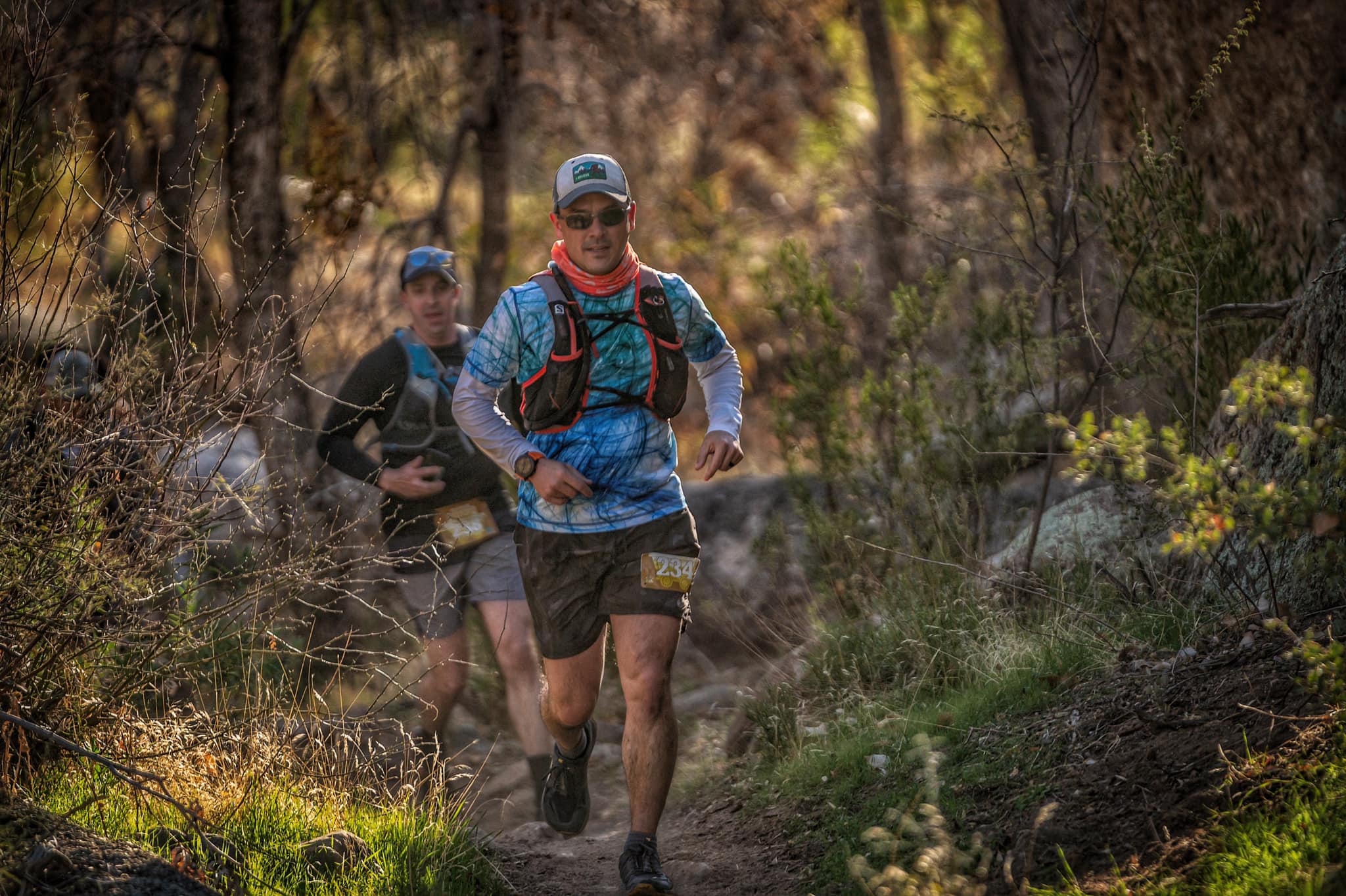
Remember, there is no magic training formula that meets the needs of everyone. Your personal commitments, time and life circumstances will help guide you down a path that's comfortable for you. My objective here is just to provide insight to the things I do based on my life, needs and goals. Perhaps you can use some of these ideas for your own training. Best of luck with your own goals!

Be safe out there!

(if you're interested in trying Vespa, please use my referral link or 'RunRovertRun15' as the coupon code when you check out)

Wednesday, August 25, 2021

Waldo 100k Race Report

I had rolled this race over from the previous year given all the pandemic cancellations so while I was excited to get my WSER qualifier for the year, I had to come to grips with a couple things -

  1. I really dislike training through the Arizona summers
  2. I had gotten used to running only a couple days a week (cross-training the other 4-5 days)
  3. I longed for better and more consistent training/race nutrition, hydration and electrolytes
This isn't one of those blogs where you have to read my life story before getting to the race report so I'll skip to the good part and then elaborate on those items above afterwards. Generally, I had concerns about finishing under 16 hours (for the finishers hat) or even under 17 hours for the WSER qualifier. With an anticipated 12,000' in climbing, this would be the most challenging 100k I'd ever done.

All you need to know is that this race went as perfect as possible and I hope to replicate my new training plan and nutrition for all my future races.

Start to Mt. Fuji (13.6 mi)

Weeks prior to the race, we kept getting emails from the RD that there was a possibility the race would be cancelled due to the fires (smoke) in the area. I'm very thankful that the weather cooperated on race day to not only blow out all the smoke, but to drop the temperatures down to a very reasonable 50-60F (cold by Arizona standards).

Like any great mountain ultra, you start straight up the ski slope. Nothing fancy - just you, your headlamp, poles and 100-200 of your closest ultra-friends 😊 Cresting this first climb, we were greeted with a very timid sunrise, chilly temperatures and amazing pine-needle-covered single track pretty much all the way to Mt Fuji.

The climb up to this peak got a bit technical and rocky but nothing more than what we experience every day in Arizona. I could definitely feel the elevation in my legs and chest on the way up. Intermittent cramping in my calves made me very aware that I wasn't hydrating or taking my salt tabs according to plan. Shame! The most disappointing thing about Mt Fuji however was that clouds and mist had overtaken the peak at that time of day so there was no view when I got to the top (boooooo!)

Mt. Fuji to Charlton Lake (32 mi)

I honestly don't remember much between Mt Fuji and Charlton Lake. As the mist dissipated and the sun came up the temperatures didn't change much - which made running so much better!! I just remember thinking to myself that this trail is so runnable despite some of the variations and climbing before you get the Charlton Lake. Additionally, I'll just say that my fueling and hydration were going well at this stage - I was probably carrying more calories than I needed but I'll tell you more about that later.


Charlton Lake was very serene and peaceful. Quite a few hikers and campers out besides the volunteers and race officials. It was a nice place to take a 50k break - I was able to gather my thoughts, more nutrition and enjoy the view of the Twins in the distance (one of the next peaks we'd summit)

Charlton Lake to Maiden Peak (50 mi)

If you haven't looked at the profile for this race, you'd see that it's basically:

  1. Up
  2. Down
Repeat 5 times 😜


Leaving Charlton Lake (A5) was another of those sweet downs where I let gravity, the cool crisp air and my fairly fresh legs propel me into the pine-covered valley of Oregon single-track. The trees are completely covered with that stringy looking moss which makes the views even more majestic and different than the deserts of Arizona.

You hit the Rd. 4920 aid station (A6) at about 37 miles and it's THE last aid station you can have a drop bag during the race. This was a bit concerning given my unique nutrition strategy for this race. I was relying only on what I brought in my drop bags so the thought of carrying enough for the next 26ish miles was a little overwhelming (and heavy!) I probably took a little too long at this aid station but the last thing I wanted was to be shit-out-of-luck later in the race lacking the right nutrition or clothing for what I suspected would be a daylight/dusk finish.

One of the race veteran's at this aid station was also commenting on how hot this next section up to Maiden Peak would be given how exposed it was. He recommended taking extra water. Now, I know that we all have relative perceptions of what 'exposed' means but coming from the desert where your only shade is a lone saguaro on the side of the trail, this section was FAR from exposed and not hot at all. Perhaps a bit more sparse but none-the-less covered in pine trees and plenty of shade to protect you from any sun (the 5 or 6 times it popped out that day).

I regretted taking all my food and extra water up Maiden Peak because honestly, it's a bitch. Like, hands-on-knees-stop-to-rest-every-10-feet kinda bitch. Because the last thing you want to be doing 50+ miles into an ultra is climb a peak averaging 18%-20% grade. Brutal.

All things considered, I made it to the top of Maiden Peak and it was glorious...


Maiden Peak to Finish

So you might wonder, how was I feeling at this point. Honestly, I was feeling better than ever. My shoulders and neck were aching due to the weight of my vest but my legs, head and heart were all full and ready for the downhill stretch to the finish line. I've honestly never felt so good this late in a race and it showed.

I was running just about everything in this section. I took a few walk breaks to help stretch my shoulders, neck and back but my legs were strong. My energy levels and spirits were high knowing (anticipating) a daylight finish was definitely possible.

Downhill running is not always great however and leaving Maiden Peak I was instantly reminded that steep quad-busting sections are never fun after 50+ miles 😖 Despite this 2 mi stretch of vertical chaos, the remainder of this section is just as glorious as the first...pine-needle covered single track trail etched with rays from the setting sun. I had my headlamp but wouldn't actually need it. I was propelled by a consistent energy source I've never known, mental clarity and the shear joy of knowing I would finish under 16 hours.

In past races, crossing the finish line was always a relief. This race, I was proud and elated with not only what I had accomplished but how I had accomplished it. I had tested both a training and nutrition strategy at this race and the results were better than I could have ever expected.

Official finish time: 15:11:16

Race results in case you're into those sorts of things:

  • 51st out of 90 finishers
  • 10th (of 20) in 40-49 AG (men's)
  • 13th (of 27) in 40-49 AG (all)

Training and Nutrition Strategy

I won't yammer on about this - look for another blog post with more detail but essentially I flipped my training and nutrition on its head in preparation for this race. Huh? What does that even mean?

Periodicity

Instead of a 3 week build to 1 week rest, I did back-to-back long runs every weekend and slowly built distance without a true "rest" week. I supplemented Monday through Friday with cycling (largely endurance climbing), rowing and boxing.

Training/Racing Nutrition

I started using Vespa, dextrose-based chews and gels along with fatty real food like olives, bacon and guacamole. Even natural sugar (fruit) seemed to confuse my GI while using Vespa. I'm able to consume far fewer calories and burn fat throughout the entire race. The gels, real food and chews help supplement occasionally but using fat for fuel appears to be a game-changer for me (let's face it, I drink beer and therefore have a lot of fat!)

There are numerous other benefits you get from training with fat but I'll save that for another post.

Supplements

During training, I take the following supplements and vitamins:


Relive my race below and stay safe out there!


Monday, June 11, 2012

Published!

About a month ago I wrote a product review for the Trail Running Club (TRC) about OptygenHP by First Endurance. It's a smaller forum of about 1,500 runners and ultra-runners...no big deal. I just like sharing my experiences with various products in the hopes that others get informed before trying them.

Well it turns out that First Endurance liked my review of their product so much that they picked it up, published it and made it their leading story in their online June e-newsletter! The original is here on the Trail Running Club website.

If you're an endurance athlete or reaching for that next level of performance, I highly recommend OptygenHP. Can't say enough good things about this product. Expensive, but good.

Thursday, April 19, 2012

Momentum

It's been a very productive and exciting 2 weeks for me in regards to training and personal health issues.

Let's start at the root of all things -

The allergies, sinus and general fatigue have virtually disappeared and allowed me to get back on schedule with training (and life for that matter). I love getting back to the feeling of actually wanting to go run and not being held back by the fear of getting sick or succumbing to nature.

I've developed a health regiment in the last 2 weeks that seems to be working well. The true test was a recent business trip...I *always* get sick during travel. Whether it's the petri-dish environment of the airplane or my attempts at staying active while on the road. In either case, I'm back from travelling, got in my required mileage and am feeling great (e.g., not sick).

I've already mentioned this in previous posts but there are 3 products that I would highly recommend for anyone training for a marathon (or longer):

While certainly not quantitative by any means, these 3 products have not only boosted my overall health (MultiV) but aided with longer runs (OptygenHP) and recovery (Vitargo). I have easily made the jump in mileage (~30 miles per week to 50 miles per week) without any fatigue or sickness. I'm very happy with these and am recommending them to everyone I know. The only downside...they're expensive. Fortunately, I have resources that assist with that part of it :)

Thanks for checking in!

Sunday, April 8, 2012

Warming back up

In more ways than one, things are starting to warm back up. Aside from the normal temperature gains this time of the year, I feel pretty good about some recent decisions and changes (improvements) in my health.

First and foremost, I've decided to stop taking my sublingual allergen treatments. It has been pretty clear that they are at the root of my ailments - from the watery eyes to that lethargic feeling of death-warmed-over in the morning - I can't go on feeling that way and still be a productive human being, let alone train for any races.

I mean honestly, what do you expect when you're actually introducing the specific allergens to your body that you know you're allergic to? I've been off these allergens for 2 days and am feeling 1000% times better. So much so that I actually made it up at 5 am on Saturday for my 'long' run of 8 miles.

I'm also heeding advice from others as well.

Sinus rinses twice a day. Probiotics. Active recovery. MultiV supplements.

The other big change I've noticed is from taking OptygenHP by First Endurance. There used to be a time I'd head out for 8-10 mile runs and need a day of rest before covering the same distance 2 days later. Not the case any longer. Not only can I do these distances back-to-back, I feel like I can take on longer runs without needing a lengthy recovery time. I'm pretty much sold on this product but damn, it's expensive.

So while I'm looking forward to getting my runs on this week, I'm also cautiously awaiting my travel next week. I really don't want to be sick again. I'm already several weeks behind in training and another blow could be devastating. We'll see...

Thanks for checking in.